Best Time to Visit Jasper: Tours, Wildlife, Weather & Winter
June through September gives you the widest choice of Jasper tours, with the Columbia Icefield Adventure, Maligne Lake Cruise and Jasper SkyTram all operating. If you want one month rather than a broad season, September is especially strong: the main summer tours are still running, temperatures are cooler, fall color arrives and the elk rut begins. By winter, the focus shifts to skiing, snowshoeing, winter wildlife and ice-based activities.
This guide compares the months and what operates in each, and the date checker shows the weather, daylight, air quality and which tours are running on your exact day.
The short answer
Jasper National Park is open year-round, but its headline tours are highly seasonal. The biggest seasonal difference is which tours are operating. The Columbia Icefield Adventure, Maligne Lake Cruise and Jasper SkyTram overlap from late May through October 11 in 2026, making summer and early fall the period with the widest choice of bookable experiences.
If your dates are flexible, June through September is the best overall period for a first visit. July and August are the warmest and busiest months, while September keeps the main tours running and adds fall color and the elk rut, with fewer visitors than midsummer. High-elevation hiking is generally most reliable from July into early October.
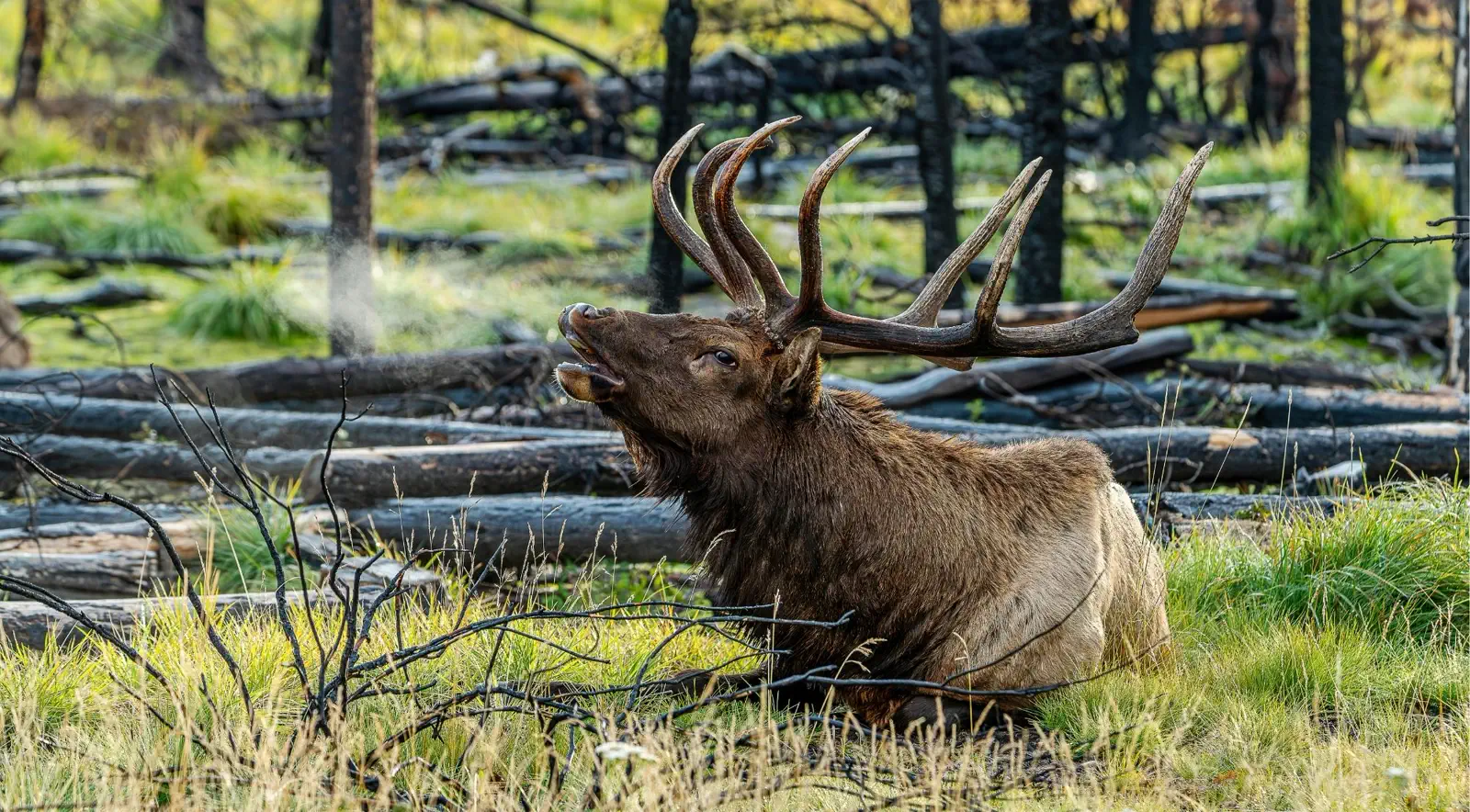
For wildlife, spring and early summer are particularly good for bears, which often feed at lower elevations and along valley roads before moving higher into the mountains. In fall they can be seen in the valley bottoms again. The elk rut runs through September into mid-October, when bulls can be aggressive, so keep at least 30 m from elk. Dawn and dusk are the best times of day for seeing wildlife, and no sighting is guaranteed.
Winter is a different Jasper trip rather than simply a reduced summer one. The major sightseeing tours close, but skiing, snowshoeing and winter wildlife take over. If you drive the Icefields Parkway, snow tires or chains are required from November 1 through March 31, and temporary weather or avalanche closures are possible.
Whatever month you visit, check the forecast, road conditions, air quality and current tour status for your exact date.
- Widest choice of tours
- June to September
- All three major sightseeing tours operating, 2026
- Late May to October 11
- Warmest weather
- July and August
- Fall color and elk rut
- September
- Bears at lower elevations
- April–June; fall
- Elk calving (keep 30 m from elk)
- Mid-May to June
- High alpine hiking
- July to early October
- Skiing and snow activities
- December to March
- Best time of day for wildlife
- Dawn and dusk
- Most useful date checks
- Weather · roads · air quality · tour status
- Late May – Oct 11Columbia Icefield Adventure, Maligne Lake Cruise and Jasper SkyTram all operating, 2026
- Sep 1 – Oct 15Elk rut, on Parks Canada’s dates
- 23.4 °C / 74 °FJuly average daily high, Jasper townsite
- Nov 1 – Mar 31Snow tires or chains required on the Icefields Parkway
- Sources: Pursuit and other operators’ published 2026 seasons; Parks Canada; Environment and Climate Change Canada 1991–2020 normals for Jasper. Full detail in How we know.
Check dates for the Columbia Icefield Adventure
For a trip between June and September, the Columbia Icefield Adventure is the tour to check first; in 2026 they operate until October 12. Pick a date to see what is available.
Check your own dates
Pick a date to see the temperature, precipitation, daylight and air quality, which of Jasper’s main tours and attractions are operating, and what the wildlife is doing. Within about two weeks it reads the live forecast; beyond that it shows the 1991–2020 average for the Jasper townsite, and it always says which of the two you are looking at.
Mid-July: every main tour is operating.
Showing the 1991–2020 average for July at the Jasper townsite until you choose a date.
- 23.4 °C / 74 °FAverage daily high
- 7.4 °C / 45 °FAverage daily low
- 52.2 mmAverage precipitation, whole month
- 16h 26mDaylight, mid-month
- OperatingColumbia Icefield Adventure
- OperatingMaligne Lake Cruise
- Berry seasonBears
Turn on JavaScript to check a specific date. The month-by-month table below carries the same figures for every month.
When Jasper’s tours run
Most of Jasper’s best-known experiences run on seasons their operators publish. These are the 2026 dates. They move a little from year to year, so check the season for your own date before you book.
- Columbia Icefield Adventure (Ice Explorer and Skywalk): May 1 to October 12, 2026, weather permitting. The Ice Explorer drives you onto the Athabasca Glacier for a stop on the ice, and the Skywalk is a glass-floored walkway over the Sunwapta Valley. Both close for the winter.
- Maligne Lake Cruise to Spirit Island: from the end of May to October 11, 2026. The operator lists May 27 on its cruise page and May 29 on its opening-dates page.
- Jasper SkyTram: April 15 to October 25, 2026.
- Miette Hot Springs: May 15 to October 12, 2026. Miette Road is closed to vehicles in winter.
- Guided wildlife tours: some operators run them all year, with an evening tour in summer and a morning tour in winter; others run only from May to early October.
- Rafting and trail rides: rafting on the Athabasca River runs through the summer into September, and trail rides at the Jasper Riding Stables from May through October, with sleigh and carriage rides from November through April.
- Skiing at Marmot Basin: last season ran from November 26, 2025 to May 3, 2026. The 2026–27 opening date had not been announced on September 18, 2026.
The trails keep their own calendar. Parks Canada says most trails hold snow until mid-June, that high passes can stay snow-covered until July, and that the Skyline Trail can typically be hiked only from early July to early October. Our Jasper hiking guide covers the trails that clear first.
The Maligne Lake Cruise has a heated, glass-enclosed cabin with a small open deck, so rain and wind mostly change the view and how long you spend on deck; wind on the lake also breaks up the mirror-calm reflections photographers look for. From $86 per person on GetYourGuide, rated 4.7 from 1,227 reviews; our Maligne Lake cruise guide covers sailing times.
Season by season
June to September
These are the months with the widest choice of tours. The Columbia Icefield Adventure, Maligne Lake Cruise, Jasper SkyTram and Miette Hot Springs are all operating, and from July most high trails are walkable. June is the wettest month in the townsite, averaging 57.6 mm, much of it as showers, and snow often lingers on the higher trails. July averages 23.4 °C (74 °F) by day in town and August 23.0 °C (73 °F).
The cost of July and August is people. Parks Canada’s monthly estimates put about 460,000 visitors in the park in each of those months, roughly twice June’s figure. The 2024 wildfire also removed about a fifth of the town’s hotel beds, so book rooms and popular tours early for summer dates.
If you want a single month, September is the one to look at. It keeps the summer tours running and has about a third fewer visitors than July or August on the same estimates. It averages 17.9 °C (64 °F) by day in town, the elk rut starts on September 1, and the aspens and poplars in the valleys turn gold during the month. Jasper has no golden larches: alpine larch grows only as far north as Banff National Park.
October
The first half of October is the end of the summer season, with the Columbia Icefield Adventure, the Maligne Lake Cruise and the hot springs running until October 11 or 12 and the elk rut until October 15. After that, few tours operate until the winter program starts. The SkyTram runs until October 25, and the Jasper Dark Sky Festival runs from October 16 to 25, 2026. October averages 9.9 °C (50 °F) by day in town, with about 10 hours 41 minutes of daylight in mid-month. Families can read our Jasper with kids in October guide, which splits the month into early and late October.
April and May
April is still largely winter in the mountains, although the SkyTram opens on April 15. May is the month the season opens: the Columbia Icefield Adventure starts on May 1, the hot springs on May 15 and the cruise at the end of the month. May averages 16.4 °C (62 °F) by day in town, but most trails keep their snow until mid-June. Bears are out and elk calving starts on May 15, and Parks Canada’s estimates put May at about 190,000 visitors, well under half the July figure.
Wildlife through the year
Jasper’s animals are there in every month, but where and how easily you see them changes with the season. No sighting is guaranteed.
Spring: bears at the roadsides
Male bears come out of their dens from mid to late March, and females with cubs are usually seen later in April or early May. In spring and early summer, grizzlies often feed on dandelions along park highways and in the valley bottoms, where the grass greens before the forest does. Parks Canada says black bears are best viewed from April to June along roadsides and in berry patches, and Tourism Jasper calls late May and early June grizzly season.
Elk calving and the rut
Parks Canada gives the elk calving season as May 15 to June 30 and the rut, the fall mating season, as September 1 to October 15. Elk are seen along the roads and in the townsite, and in both periods they can be aggressive: keep at least 30 m away, avoid lone females and calves in spring, and never stand or park between a bull and his females in the fall.
Summer and fall: higher up, then back down
Grizzlies move up into the alpine for the summer. From midsummer, bears feed on buffaloberries along trails and roads (Parks Canada issued its berry-season warning on July 13, 2026), which keeps them active but not necessarily easier to see. In fall, when food is scarcer, grizzlies can be seen in the valley bottoms again, and Parks Canada gives September and October as the other good months for black bears.
Any month: sheep and goats
Bighorn sheep are often seen on Highway 16 east of town and near Tangle Falls on the Icefields Parkway, and mountain goats at the Goat Lick viewpoint on the parkway.
Parks Canada gives dawn and dusk as the best viewing times for most park wildlife. Guided tour times vary by operator: one runs its summer tour in the evening from May 1 to October 14, 2026 and a morning winter tour from October 13 to April 30.
Month by month
Temperature, precipitation and snowfall below are the official 1991–2020 averages for the Jasper townsite, at about 1,060 m. Maligne Lake is about 600 m higher and the Columbia Icefield nearly 1,000 m higher, so both are colder than these figures. Precipitation is a monthly total, not a daily rate, and says nothing about how many days it falls on.
| Month | Tours | Wildlife | Avg high | Avg low | Precip | Snowfall | Daylight | Visitors |
|---|---|---|---|---|---|---|---|---|
| January | Winter tours, skiing | Bears denned | −3.2 °C / 26 °F | −14.4 °C / 6 °F | 20.2 mm | 21.2 cm | 8h 07m | 53,000 |
| February | Winter tours, skiing | Bears denned | 0.5 °C / 33 °F | −12.7 °C / 9 °F | 15.2 mm | 11.8 cm | 9h 52m | 52,000 |
| March | Winter tours, skiing | Bears emerging | 4.7 °C / 40 °F | −8.2 °C / 17 °F | 19.6 mm | 17.0 cm | 11h 47m | 69,000 |
| April | SkyTram from Apr 15 | Bears at lower elevations | 10.9 °C / 52 °F | −3.6 °C / 26 °F | 19.6 mm | 7.9 cm | 13h 55m | 151,000 |
| May | Icefield, Miette; cruise from late May | Bears low; elk calving | 16.4 °C / 62 °F | 0.9 °C / 34 °F | 36.5 mm | 4.7 cm | 15h 47m | 189,000 |
| June | All main tours | Bears low; elk calving | 20.0 °C / 68 °F | 5.2 °C / 41 °F | 57.6 mm | 0.0 cm | 16h 52m | 220,000 |
| July | All main tours | Bears higher; berries | 23.4 °C / 74 °F | 7.4 °C / 45 °F | 52.2 mm | 0.0 cm | 16h 26m | 461,000 |
| August | All main tours | Bears higher; berries | 23.0 °C / 73 °F | 6.1 °C / 43 °F | 50.8 mm | 0.0 cm | 14h 48m | 464,000 |
| September | All main tours | Elk rut; bears in valleys | 17.9 °C / 64 °F | 2.5 °C / 36 °F | 36.2 mm | 2.1 cm | 12h 44m | 316,000 |
| October | Main tours to Oct 11-12 | Elk rut to Oct 15 | 9.9 °C / 50 °F | −2.4 °C / 28 °F | 26.0 mm | 8.3 cm | 10h 41m | 60,000 |
| November | Winter tours begin | Bears denning | 1.5 °C / 35 °F | −8.1 °C / 17 °F | 24.4 mm | 20.8 cm | 8h 44m | 44,000 |
| December | Winter tours, skiing | Bears denned | −3.5 °C / 26 °F | −14.1 °C / 7 °F | 17.9 mm | 17.9 cm | 7h 38m | 51,000 |
Jasper’s townsite sits in a dry valley: July, the wettest summer month after June, averages 52.2 mm, and winter precipitation falls mostly as snow, about 21.2 cm in January. Daylight runs from about 16 hours 52 minutes in mid-June to 7 hours 38 minutes in mid-December, which decides how much a winter day can hold.
Jasper in winter
Winter in Jasper is its own trip. The Columbia Icefield Adventure, Maligne Lake Cruise and SkyTram are closed, and the focus shifts to snow sports and winter wildlife. Marmot Basin is the ski area, about 20 minutes from town, and Parks Canada grooms cross-country ski trails, including the Moab Lake route from December 19 to March 15 in its current listing. Canyon ice walks take you along frozen waterfalls: Maligne Canyon has been closed since the 2024 wildfire, so in 2025–26 operators ran them in Pleckaitis Canyon instead, one of them from December 18 to March 31. Winter wildlife tours look for elk, bighorn sheep and other animals that stay active. Snowshoeing is possible on many lower trails, Pyramid Lake and Mildred Lake are cleared for skating, and the Jasper Planetarium opens on reduced days from November to April.
January averages a daily low of −14.4 °C (6 °F) in the townsite, and colder spells happen. The Icefields Parkway stays open with snowplows running daily, but snow tires or chains are required from November 1 to March 31, there are no services between Jasper and Lake Louise, and it can close temporarily in storms or for avalanche control, so check road conditions before driving. Our Icefields Parkway guide covers winter driving.
Families traveling in November can read our Jasper with kids in November guide, which compares early and late November. Two areas are closed to all access from November 1 to May 15 to protect caribou: the Tonquin and À la Pêche ranges, including Cavell Road. The long nights also give more chances to see the northern lights, although a sighting needs a clear sky and auroral activity on the night; our dark sky and stargazing guide has the best spots.
Wildfire smoke
No monthly average captures smoke. In summer, smoke from wildfires elsewhere in Western Canada can settle into the valleys and hide the mountains for days at a time. It cannot be predicted from a calendar, which is why it is in the date checker above and not in a month recommendation. Parks Canada points visitors to Environment and Climate Change Canada’s air quality forecasts, and if a summer trip is built around views, it helps to leave more than one day for the Icefield or the cruise.
Closed right now
A park that is normally open can still have parts of it shut on the day you arrive. These closures and warnings were live when this page was last checked, and none of them are part of the seasonal pattern.
Checked September 18, 2026. Maligne Canyon and Cavell Road, including Cavell Meadows and the Path of the Glacier, are closed for the whole 2026 season after the 2024 wildfire, with slope work at Cavell planned from fall 2026 to spring 2027. Parks Canada has warnings in place for the elk rut, issued August 25 and running until mid-October, and for bears in the townsite, from September 5 until further notice. Highway 93A can be reached from its south entrance only from mid-September to mid-November 2026 for roadwork.
This is a snapshot, not a live feed, and should be rechecked before October 12, 2026. Parks Canada’s important bulletins for Jasper carry the current list.
Best Time to Visit Jasper: Common Questions
When is the best time to visit Jasper?
If your dates are flexible, June through September is the best overall period for a first visit, because the Columbia Icefield Adventure, Maligne Lake Cruise and Jasper SkyTram are all operating. July and August are the warmest and busiest months. If you want one month, September is especially strong: the main tours are still running, it is cooler, fall color arrives and the elk rut begins. From December to March the summer tours are closed and Jasper becomes a snow-focused trip of skiing, snowshoeing and winter wildlife.
Is September a good time to visit Jasper?
Yes. If you want a single month, September is especially strong. The Columbia Icefield Adventure, Maligne Lake Cruise and Jasper SkyTram all operate until mid-October, the elk rut runs from September 1 to October 15, and the aspens turn gold in the valleys. Parks Canada’s monthly estimates put September well below July and August for visitors. Days are cooler, averaging 17.9 °C / 64 °F in the townsite, and the first snow can fall at higher elevations.
Is May a good time to visit Jasper?
It is a good month for wildlife and a partial month for tours. Bears often feed at lower elevations and elk calves are born from May 15, the Columbia Icefield Adventure opens on May 1 and Miette Hot Springs on May 15, but the Maligne Lake Cruise does not start until the last days of the month and most trails hold snow until mid-June.
What is open in Jasper in winter?
The Columbia Icefield Adventure, Maligne Lake Cruise, Jasper SkyTram and Miette Hot Springs are all closed, but winter has its own trip: skiing at Marmot Basin, cross-country skiing, snowshoeing, canyon ice walks, winter wildlife tours, skating and the Jasper Planetarium on reduced days. Maligne Canyon is closed after the 2024 wildfire, so in 2025–26 operators ran their ice walks in Pleckaitis Canyon instead. The Icefields Parkway stays open, with snow tires or chains required from November 1 to March 31 and no services between Jasper and Lake Louise.
When do the Columbia Icefield Adventure and the Maligne Lake Cruise open and close?
In 2026 the Columbia Icefield Adventure (Ice Explorer and Skywalk) runs from May 1 to October 12, weather permitting. The Maligne Lake Cruise runs from the end of May to October 11; the operator lists May 27 on one page and May 29 on another. The Jasper SkyTram runs from April 15 to October 25. Dates change a little each year, so check your date before you book.
When is the best time to see wildlife in Jasper?
For bears, spring and early summer, when grizzlies often feed on dandelions along park highways and in the valley bottoms, and again in fall, when they return to the valleys; Parks Canada says black bears are best viewed from April to June and in September and October. For elk, calving runs from May 15 to June 30 and the rut from September 1 to October 15, and in both periods you should stay at least 30 m away. Dawn and dusk are the best times of day. No sighting is guaranteed in any month.
Can you see the northern lights in Jasper?
Sometimes, but it is luck, not something to plan around. Jasper is a dark-sky preserve, and the long nights from October to March give more chances: mid-December has about 7 hours 38 minutes of daylight. You also need a clear sky and auroral activity on the night. The Jasper Dark Sky Festival runs from October 16 to 25, 2026.
Do you have to pay to enter Jasper National Park?
Yes. The free Canada Strong Pass admission ended on September 7, 2026, and regular fees apply from September 8: a day pass is CAD $12.25 per adult, and youth enter free. The pass does not cover tours or the hot springs.
How we know
Every figure on this page comes from a named source. The ones the recommendations rest on are listed here, with what they do and do not cover.
- Tour and attraction seasons. The operators’ own published 2026 dates: Pursuit (Banff Jasper Collection) for the Columbia Icefield Adventure, the Maligne Lake Cruise and the Jasper SkyTram; SunDog Tours and Maligne Adventures for wildlife tours and rafting; Jasper Riding Stables; Marmot Basin; and Parks Canada for Miette Hot Springs and road seasons. Where two pages from the same operator disagree, as they do for the cruise’s opening day, the page gives both.
- Wildlife. Parks Canada’s Jasper pages for elk calving and rut dates, bear viewing seasons, bighorn sheep and mountain goats, and its July and August 2026 bulletins; Tourism Jasper for bear emergence and late-May grizzly season. The range limit of alpine larch is from the US Forest Service’s Silvics of North America.
- Temperature, precipitation and snowfall. Environment and Climate Change Canada, Canadian Climate Normals 1991–2020, location JASPER, a composite of the Jasper station (Climate ID 3053520, 1,062 m) and Jasper Warden (3053536, 1,020 m). ECCC calculates rain, snow and total precipitation separately for this period, so rain and snow do not always add up to the total.
- Visitors. Parks Canada’s monthly visitor estimates for Jasper National Park, 2015–2019, as republished in the Alberta Tourism Market Monitor; and Parks Canada’s annual reports for yearly totals (2.48 million in 2023, 1.13 million in the wildfire year of 2024, 2.13 million in 2025). The hotel-bed figure is from CBC News, August 2026.
- Daylight. Computed for 52.874°N, 118.081°W with the standard NOAA solar-position method at mid-month. These are calculated, not observed, and are good to within a few minutes.
- Current closures and fees. Parks Canada’s Jasper bulletins, wildfire recovery page, roads page and fees page, read on September 18, 2026.
- The date checker. Open-Meteo’s forecast and air-quality APIs inside the forecast window, and the climate normals above beyond it.
Where this evidence stops. The climate figures are measured in the Jasper townsite and cannot tell you the conditions at Maligne Lake or on the Columbia Icefield, which are higher, colder and windier, and there is no official climate average for the Icefield at all. The monthly visitor figures are Parks Canada estimates built from traffic counters, they exclude tour groups, and none have been published since 2020, so they describe the park’s seasonal pattern before the 2024 wildfire, not this year’s numbers; a vehicle counter on Highway 16 agrees that July and August are far busier than any other month, but puts June and September closer together than the estimates do. They are not a measure of how busy a particular tour or trail will be. Wildlife timing is a pattern, not a schedule, and a month when animals are active is not a promise of a sighting. The date checker is not a forecast beyond about two weeks; past that it shows a 30-year average, which cannot tell you what your own day will do. Operators’ 2026 dates can change, so confirm anything your trip depends on before you book.