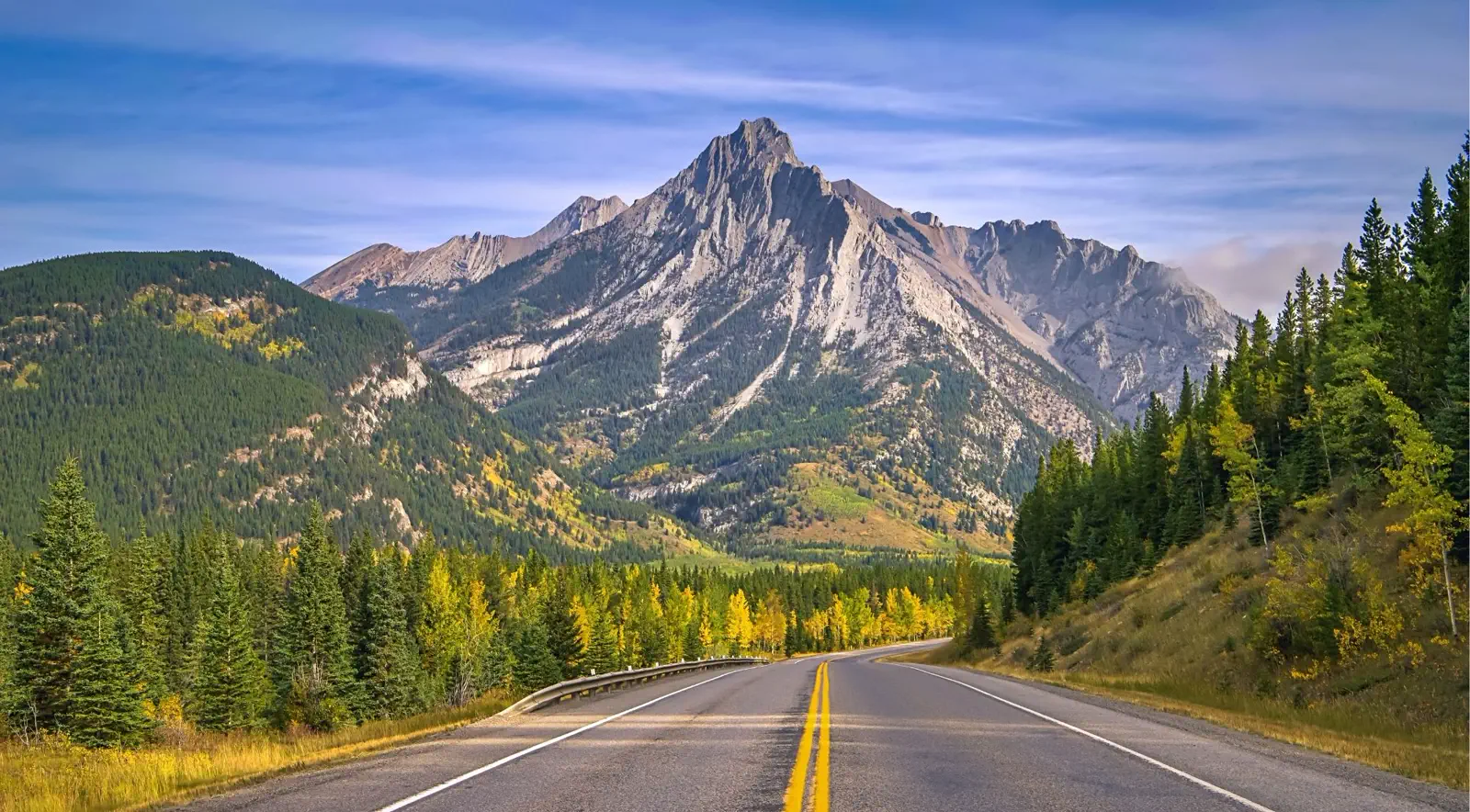
Driving the Icefields Parkway: The Complete Banff to Jasper Road Trip Guide
About 230 km of glaciers, turquoise lakes and roadside wildlife between Lake Louise and Jasper — one of the most beautiful drives on Earth, where the road is the destination.
The Icefields Parkway is regularly called one of the most beautiful drives in the world, and for once the hype is earned. Running for about 230 kilometres through the heart of the Canadian Rockies, it connects Lake Louise (near Banff) with the town of Jasper, threading past glaciers, turquoise lakes, thundering waterfalls, and wildlife around nearly every bend. This is not a road you drive to get somewhere — the road is the destination.
This guide gives you everything you need to plan the trip for 2026: the route and timing, every worthwhile stop, park pass and fuel logistics, seasonal and winter conditions, and whether to drive it yourself or take a guided tour.
2026 status at a glance: The Icefields Parkway (Highway 93 North) is fully open for 2026. It was among the first areas to reopen after the 2024 Jasper wildfire, and while fire damage is visible near the Jasper end, it ends before the Sunwapta Falls area — meaning the iconic southern stops (Peyto Lake, Bow Lake, the Columbia Icefield) are entirely unaffected.
The route at a glance
- Highway: Highway 93 North (the "Icefields Parkway")
- Distance: approximately 230 km between Lake Louise and Jasper
- Drive time, no stops: about 3 to 3.5 hours
- Realistic drive time with stops: a full day (7–10 hours); many travellers split it or make it the centrepiece of a multi-day Rockies trip
- Direction: you can drive it either way; this guide runs south to north (Lake Louise → Jasper)
The single most important piece of advice: do not rush it. People who try to "get from Banff to Jasper" in an afternoon miss the entire point. Plan a full day, or ideally build the drive into a two- or three-day loop.
Other Experiences You Might Enjoy
Before you go: essential logistics
Park pass. A valid Parks Canada pass is required for the entire length of the parkway — it runs through both Banff and Jasper National Parks. A day pass is about $12.25 per adult (up to $24.50 for a family/group in one vehicle); an annual Discovery Pass (~$83.50 adult) pays off if you are staying several days. Parks Canada is offering free park admission from June 19 to September 7, 2026 under the Canada Strong Pass — great for your wallet, but expect heavier traffic and fuller parking lots during that window.
Fuel. This is the logistic that catches people out. There is very little fuel along the parkway. The only reliable mid-route option is at Saskatchewan River Crossing (The Crossing Resort), roughly the midpoint. Fill your tank in Lake Louise or Jasper before you set out, and top up at the Crossing if you are running low.
Food, water, and washrooms. Services are sparse. Pack water, snacks, and a picnic lunch. Washrooms exist at major stops (Bow Lake, the Glacier Discovery Centre, Saskatchewan River Crossing) but are far apart.
Cell service. Expect little to no cell coverage for long stretches. Download maps offline and tell someone your plan.
The must-stop highlights (south to north)
Bow Lake
One of the first great stops heading north, Bow Lake is a broad, glacier-fed lake with a classic Rockies backdrop. The historic Num-Ti-Jah Lodge sits on its shore, and easy lakeside walks let you stretch your legs early in the drive.
Bow Summit & Peyto Lake
A short, paved walk from the Bow Summit parking area leads to the Peyto Lake viewpoint — and the reveal is spectacular. From above, the lake forms a vivid, wolf-head-shaped splash of electric blue against the forest. It is one of the most photographed spots in the Rockies, so arrive early to beat the crowds and the tour buses.
Saskatchewan River Crossing
The practical midpoint: fuel, food, and washrooms at The Crossing Resort. Not scenic in itself, but a useful reset point — and a good place to top up the tank.
Columbia Icefield & Athabasca Glacier
The centrepiece of the entire drive. Here you can ride an Ice Explorer onto the Athabasca Glacier and walk the glass-floored Columbia Icefield Skywalk, or simply hike the free Toe of the Athabasca Glacier trail from the parking area for a close-up view at no cost. Even if you skip the paid tours, stop at the Glacier Discovery Centre — the glacier views from the road are extraordinary. See our dedicated Columbia Icefield & Athabasca Glacier guide for full details and 2026 prices.
Book the parkway's centrepiece — Columbia Icefield Skywalk & Ice Explorer Ticket
Check availability & pricesFree cancellation up to 24h · Secure checkout via GetYourGuide
Tangle Falls & the northern glaciers
North of the icefield, a series of roadside pullouts — Tangle Falls, Stutfield Glacier, and the "Goats and Glaciers" viewpoint — reward a quick stop. Tangle Falls in particular is a photogenic multi-tiered cascade right beside the road.
Sunwapta Falls
About 55 km south of Jasper, Sunwapta Falls drops through a narrow gorge around a small rock island. The upper falls are a short walk from the parking area; a longer trail leads to the quieter lower falls.
Athabasca Falls
The final major stop before Jasper, and one of the most powerful. Though not especially tall, Athabasca Falls forces an enormous volume of water through a narrow quartzite gorge, and the paved viewing platforms let you feel the roar up close.
Best time of year to drive it
Summer (June–September) is the prime window: all attractions are open, days are long, and the weather is at its most reliable. It is also the busiest, so start early to claim parking at the popular viewpoints.
Shoulder seasons (May, October) bring fewer crowds and lovely light — fall can be gorgeous — but variable weather and shorter attraction hours. The Columbia Icefield tours, for instance, run only from about May to mid-October.
Winter (November–April) transforms the parkway into a frozen wonderland, but this is serious driving. The road stays open but is not consistently maintained, and it can close temporarily during storms.
Winter driving: read this before you go
If you plan to drive the parkway between roughly November and April:
- Winter tires or a 4x4 are strongly recommended — often essential.
- Check road conditions before departing and be ready to turn back; temporary closures happen during and after storms.
- Carry emergency supplies: warm clothing, blankets, food, water, a full tank, and a charged phone (even if there is no signal).
- Services are even sparser in winter, with some seasonal facilities closed entirely.
- Daylight is short. Plan to complete the drive well before dark.
For most visitors, winter is best experienced on a guided tour rather than a self-drive.
Self-drive or guided tour?
Self-driving gives you total freedom — stop where you like, linger as long as you want, and set your own pace. For confident drivers in summer, it is the classic way to experience the parkway.
Guided bus tours are a great choice if you would rather not drive (especially in winter), want expert narration, or are visiting without a car. Several operators run day trips and multi-day tours from Calgary, Banff, and Jasper. Many bundle the drive with the Columbia Icefield Ice Explorer and Skywalk experience and lunch, and many multi-day Rockies packages traverse the full parkway between Banff and Jasper. Browse current options and 2026 pricing in our day tours from Calgary & Rockies itineraries guide.
Rather not drive? Full-parkway guided day tour — Jasper ⇄ Banff Icefields Parkway & Glacier
Check availability & pricesFree cancellation up to 24h · Secure checkout via GetYourGuide
A suggested one-day itinerary (Lake Louise → Jasper)
7:30 AM — Depart Lake Louise
Tank full, coffee in hand.
8:15 AM — Bow Lake
A short lakeshore walk to start the day.
9:00 AM — Peyto Lake viewpoint
Early means fewer crowds at the reveal.
10:30 AM — Saskatchewan River Crossing
Top up fuel, quick break.
11:30 AM — Columbia Icefield
Ice Explorer + Skywalk (pre-booked).
2:30 PM — Tangle Falls
A quick photo stop beside the road.
3:30 PM — Sunwapta Falls
Short walk to the upper falls.
4:30 PM — Athabasca Falls
Feel the roar from the platforms.
5:15 PM — Arrive Jasper
Adjust freely — there is no wrong way to do it, as long as you give it the time it deserves.
Final tips
- Start early. Parking at Peyto Lake and the Columbia Icefield fills up fast in summer.
- Pre-book any paid attractions (Columbia Icefield especially) so you are not left out on a busy day.
- Keep your gas tank above half the entire way.
- Drive for wildlife. Bears, elk, bighorn sheep, and mountain goats are common roadside. Slow down, don't stop in traffic lanes, and never feed animals.
- Respect the weather. Mountain conditions change fast in any season.
The Icefields Parkway is the thread that ties the Canadian Rockies together. Give it a full day, and it will give you a lifetime of memories.
Driving the Icefields Parkway: Frequently Asked Questions
How long does it take to drive the Icefields Parkway?
The Icefields Parkway is about 230 km between Lake Louise and Jasper. With no stops it takes roughly 3 to 3.5 hours, but you should not drive it that way — with the must-see stops it is realistically a full day of 7 to 10 hours. Many travellers split it over two or three days or build it into a wider Rockies loop.
Is there gas on the Icefields Parkway?
Barely. The only reliable fuel between Lake Louise and Jasper is at Saskatchewan River Crossing (The Crossing Resort), roughly the midpoint. Fill your tank in Lake Louise or Jasper before you set out and top up at the Crossing if you are running low. Keep the tank above half the whole way, and expect little to no cell service for long stretches.
Do you need a park pass to drive the Icefields Parkway?
Yes. A valid Parks Canada pass is required for the entire length of the parkway, which runs through both Banff and Jasper National Parks. A day pass is about $12.25 per adult (up to $24.50 for a family/group in one vehicle); an annual Discovery Pass is about $83.50. Parks Canada is offering free admission from June 19 to September 7, 2026 under the Canada Strong Pass, so expect heavier traffic in that window.
Can you drive the Icefields Parkway in winter?
Yes, but it is serious driving. The road stays open in winter but is not consistently maintained and can close temporarily during storms. Winter tires or a 4x4 are strongly recommended, daylight is short, and services are even sparser. Carry emergency supplies and check road conditions before departing. For most visitors, winter is best experienced on a guided tour rather than a self-drive.
Should you drive the Icefields Parkway yourself or take a guided tour?
Self-driving gives you total freedom to stop and linger at your own pace, and for confident drivers in summer it is the classic way to do it. A guided bus tour is better if you would rather not drive (especially in winter), want expert narration, or are visiting without a car. Operators run day trips and multi-day tours from Calgary, Banff and Jasper, many bundling the Columbia Icefield Ice Explorer and Skywalk.